Biological purification as a building block of the climate transition

Compared to physical/chemical water purification, biological processes distinguish themselves not only in their efficiency and circularity, but also in their favorable climate impact. Through the powerful yet subtle action of evolutionarily sophisticated enzyme systems, microorganisms are able to thrive on the conversion of all kinds of substances. While physical/chemical systems often require significant energy input (in the form of pressure, temperature, or chemicals), microbiology operates spontaneously under virtually any natural conditions. This allows biological systems to offer solutions for which a sound business case cannot be made in physical/chemical systems.
Climate-friendly biological methane oxidation in groundwater purification
In addition to the usual typical groundwater components iron, manganese, and ammonium, anoxic groundwater can also contain methane (CH4, "natural gas"). CH4 is a much more potent greenhouse gas than CO2: 1 kilogram of CH4 is equivalent to 25 CO2 equivalents. For this reason, the conventional methane removal process during drinking water production by venting to the atmosphere is becoming increasingly undesirable. For large-capacity groundwater treatment plants with high methane levels, it is possible to separate the methane from the water and reuse it effectively. For systems of several million m3/year and methane concentrations up to approximately 10 mg/L, a sound business case cannot be made, even when an optimistic development of emission rights is taken into account. Significant climate benefits can be achieved by converting methane into CO2 before exhausting it.
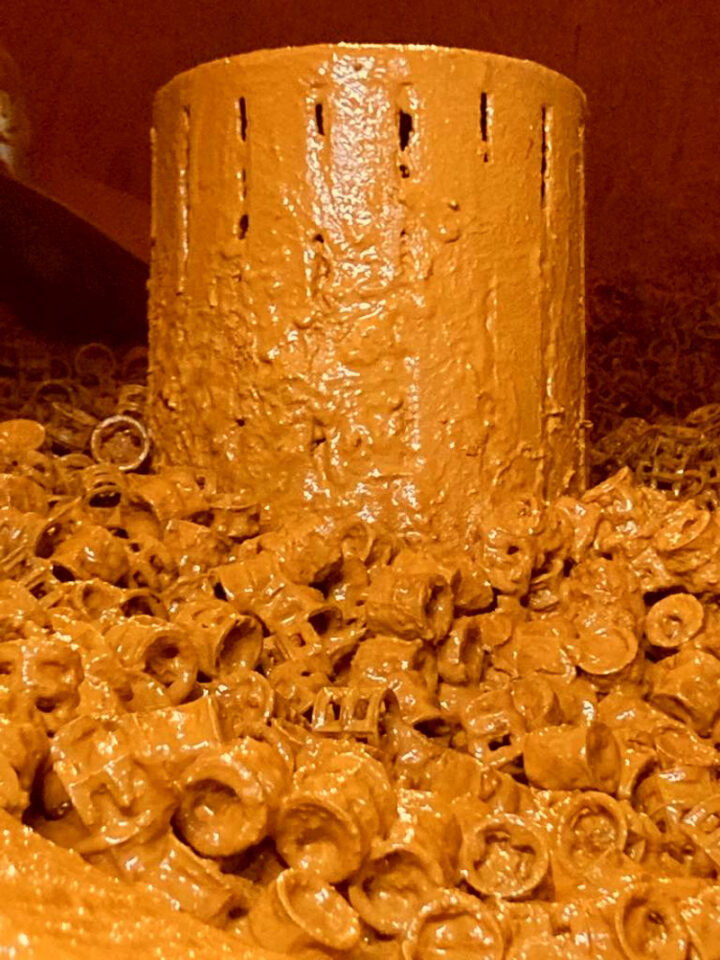
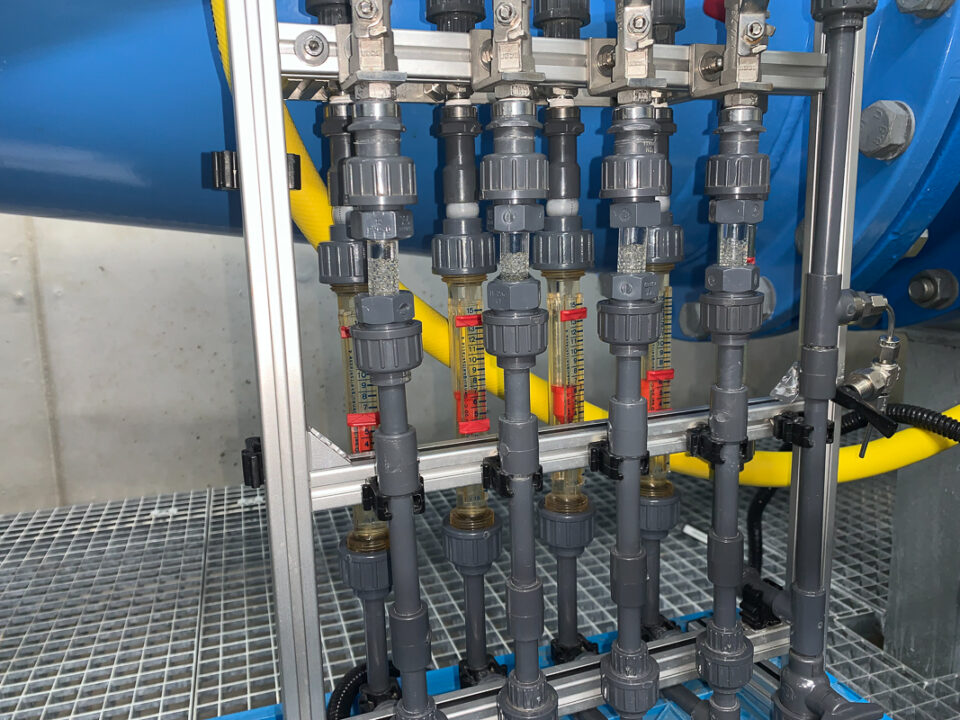
Methane is an energy-rich gas that, when burned, produces a significant amount of heat or biomass. While methane concentrations are too low to simply flare the methane (a strange idea for drinking water production), it can be effectively converted biologically. A concern is that biological growth during the treatment process poses a risk to the biological quality and stability of the produced water. Biological treatment, and especially methane conversion, produces a significant amount of biomass (visible as slime in Figure 1). However, this resistance has proven unfounded. For over four years, a world-first innovative treatment system using biological methane oxidation in drinking water production has been operating at the Breehei pumping station of drinking water company WML. The treatment system, with dry filtration, forced aeration, and wet filtration, is full-scale compared to a more conventional treatment system (tower aeration and double wet filtration). Both treatment systems produce excellent-quality drinking water from deep anaerobic groundwater. The so-called regrowth potential, a highly sensitive method for determining biological stability (see Figure 2), appears to be comparably low for both systems and easily meets the strictest sectoral guidelines. The innovative biological treatment design scores better on sustainability aspects, investment and operating costs, maintenance effort, and user assessment and was identified as the preferred option in an integrated business case.
Click <here> for the H2O journal article with more background information on process optimization during start-up and biological stability. Microbiological aspects of the start-up phase are further explored in a peer-reviewed English article.
Support for smart sustainability
Whether it concerns reducing the CO2 footprint of water treatment by reducing direct emissions, energy consumption or chemicals, by better utilisation of nutrients and other valuable components or by smart connections and terminations in the water cycle, I would be happy to explore opportunities with you for making your system more sustainable.